Why are historic churches being set on fire by arsonists in Canada?
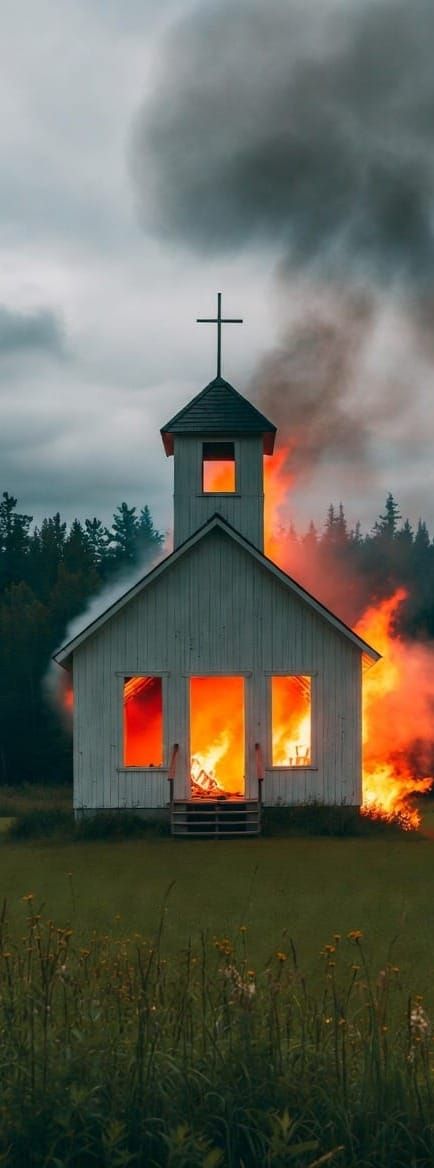
The surge in arson attacks on historic churches in Canada began prominently in mid-2021 and has continued at elevated levels through 2025, with dozens of confirmed arsons and many more suspicious fires or acts of vandalism.
Scale of the Incidents
- Reliable tallies (from sources like CBC News reviews [use caution when reading], Catholic Civil Rights League tracking, and Macdonald-Laurier Institute analysis) indicate:
- Roughly 33 churches destroyed by fire between May 2021 and late 2023, with ~24 confirmed as arson (only a couple ruled accidental).
- Broader counts of churches burned, vandalized, or damaged since 2021 range from 80–120+, including both Catholic and non-Catholic (e.g., Anglican, Ukrainian Orthodox) buildings.
- Statistics Canada data shows arsons at religious institutions roughly doubled as a share of all arsons after 2021 (from ~0.38% pre-2021 to ~0.73% in 2021–2023), with absolute numbers rising from dozens annually to 90 in 2021 and 74 in 2022; the elevated rate persisted into 2024–2025.
- Many affected churches were historic (some over 100 years old) and located on or serving First Nations reserves/communities, though attacks have occurred nationwide, including urban areas like Toronto.
Clearance rates remain very low — over 96% of cases unsolved in some analyses — far below the typical rate for property arson.
Primary Trigger: Residential Schools Controversy
The sharp increase began shortly after the May 27, 2021, announcement by the Tk’emlúps te Secwépemc First Nation near Kamloops, B.C., of ground-penetrating radar (GPR) findings suggesting 215 potential unmarked graves at the site of a former Indian Residential School (operated largely by the Catholic Church from the late 1800s to 1996 as part of Canada’s assimilation policy for Indigenous children). Similar GPR announcements followed at other former school sites.
- These claims sparked widespread national outrage, media coverage, and political statements framing the schools as sites of cultural genocide, abuse, and deaths (official records show thousands of Indigenous children died at the schools from disease, neglect, etc., though exact causes and numbers remain debated).
- The first major arsons occurred in June 2021 on Indigenous lands in British Columbia (e.g., Sacred Heart Mission Church in Penticton and St. Gregory’s on Osoyoos First Nation), with police describing them as suspicious and linked in timing to the anger over the graves announcements.
- A quantitative study by the Macdonald-Laurier Institute (2025) concluded that the statistical spike in arsons correlates strongly with these burial announcements rather than a broad rise in anti-religious sentiment overall. Some early fires even occurred on First Nations land and affected churches used by Indigenous congregations.
Subsequent GPR claims (e.g., hundreds of “unmarked graves” at other sites) received heavy coverage, though many have not resulted in confirmed excavations or forensic proof of mass graves/murder. Critics argue media and political amplification of unverified claims contributed to the climate of anger.
Known or Suspected Motives
- Retaliation linked to residential schools: Many officials, Indigenous leaders, and analysts tie a significant portion of the arsons to lingering trauma and resentment toward the Catholic Church’s historical role in running most of the schools. Police have noted motives “as varied as the people themselves,” but the timing strongly suggests this as a key driver for the surge.
- Varied perpetrators: Arrests (when made) have included Indigenous individuals in some cases, as well as others from different backgrounds. Not all incidents show a uniform ideological pattern; some appear opportunistic, tied to mental health issues, or part of broader crime sprees (e.g., vehicle thefts leading to arson).
- Not primarily other hate ideologies: Claims blaming Muslims or organized anti-Christian campaigns lack evidence in most cases. Official hate crime stats show rises in anti-Jewish and anti-Muslim incidents in recent years (linked to other global events), but church arsons are treated separately.
- Some Indigenous leaders and survivors have publicly condemned the burnings, noting they harm reconciliation efforts and destroy community landmarks (including churches still used by Indigenous Christians).
Broader Context and Response
- Low prosecution: Very few arsonists have been identified or convicted, which some reports link to inadequate specialized investigation resources early on.
- Political and social reaction: The issue has been polarizing. Some view the arsons as understandable (if wrong) expressions of grief; others call them domestic terrorism or anti-Christian hate. Proposals for better tracking, dedicated arson units, and stronger penalties have been discussed but saw limited action during the 2025 election cycle.
- Historic churches are vulnerable due to wooden construction, remote locations, and sometimes lower security.
In summary, the wave of arsons against historic churches is overwhelmingly linked in timing and public discourse to the intense national reaction following 2021 residential school graves announcements — representing perceived historical grievances against the churches involved. While some incidents have other motives and most remain unsolved, the pattern has damaged cultural heritage, strained reconciliation, and raised concerns about inadequate protection for places of worship. Investigations continue case-by-case by RCMP and local authorities.