What data is used to create the Consumer Price Index?
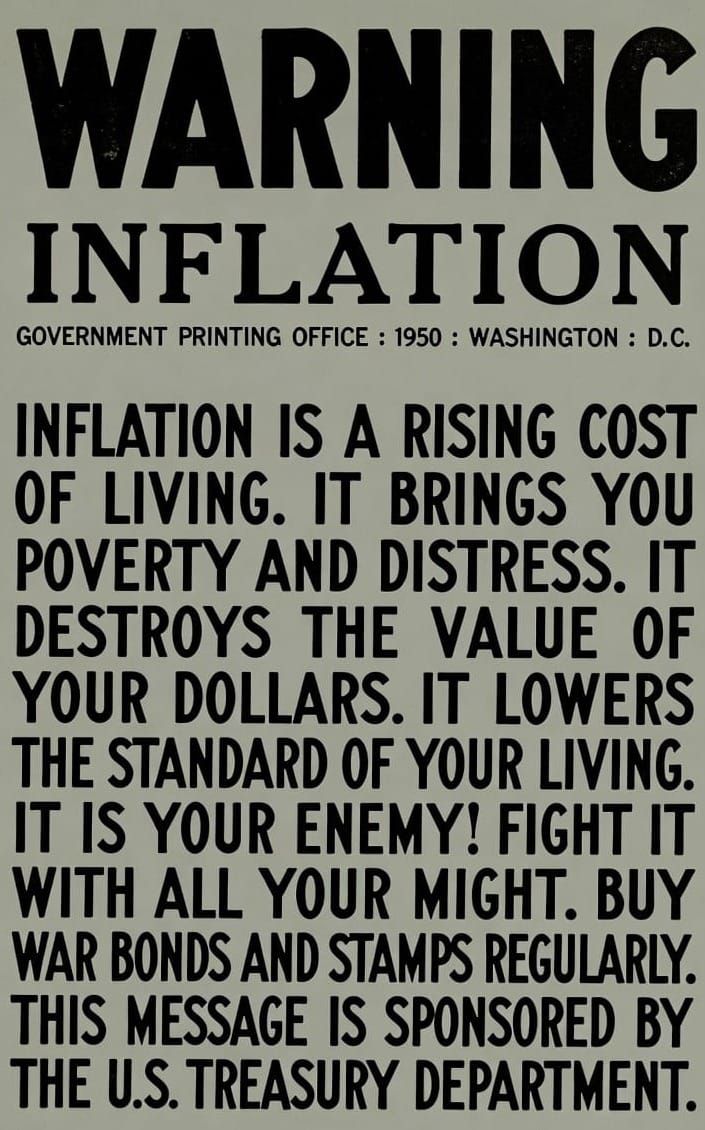
The primary US inflation index that most people refer to is the Consumer Price Index (CPI), produced monthly by the Bureau of Labor Statistics (BLS). It measures the average change over time in prices paid by urban consumers for a fixed "market basket" of goods and services. The most commonly cited version is CPI-U (for All Urban Consumers), which covers about 93% of the US population.
There is also the PCE price index (Personal Consumption Expenditures), produced by the Bureau of Economic Analysis, which the Federal Reserve prefers for monetary policy. It is broader but less commonly called "the" inflation index.
What Data Goes Into the CPI?
The CPI is not based on a single number or vague estimate. It uses two main types of real-world data:
- Weights (expenditure shares): These come from the Consumer Expenditure (CE) Survey, a detailed household survey that tracks what Americans actually spend their money on (out-of-pocket). Weights reflect the proportion of total consumer spending each category represents. They are updated annually (as of 2023) using spending data from two years earlier.
- Price data: Thousands of actual price quotes collected monthly (or bimonthly) for specific items in the basket. Prices are gathered from ~23,000–26,000 retail stores, service establishments, and housing units across 75–87 urban areas. Collection methods include in-person visits (historically ~2/3), phone, websites/apps, and secondary sources (e.g., J.D. Power for vehicles/gasoline, government data for airlines or utilities, medical claims data). About 80,000–100,000 price quotes per month for goods/services, plus ~8,000 rental quotes.
The index is calculated as a weighted average of price changes: if a heavily weighted item (like rent) rises a lot, it pulls the overall index up more than a lightly weighted item.
Key exclusions: Investment items (stocks, bonds), income taxes, and non-consumer spending. It includes sales/excise taxes and user fees (e.g., water/sewer).
Major Categories and Approximate Weights
Weights evolve slightly over time with consumer spending patterns, but here is a recent breakdown for CPI-U (based on December 2024 data, using 2023 expenditure weights; similar patterns hold in 2025/2026 releases):
- Housing — ~44.2% (by far the largest)
- Shelter (rent + owners' equivalent rent for homeowners) — ~35.5%
- Owners' equivalent rent — ~25%
- Rent of primary residence — ~7.5%
- Other housing (utilities, furniture, maintenance) — remainder of housing
- Shelter (rent + owners' equivalent rent for homeowners) — ~35.5%
- Transportation — ~16.6%
- New and used vehicles
- Motor fuel (mostly gasoline) — ~2.9%
- Vehicle insurance, maintenance, public transit
- Food and beverages — ~14.5%
- Food at home (groceries: cereals, meats, dairy, fruits/vegetables, etc.) — ~8%
- Food away from home (restaurants) — ~5.6%
- Medical care — ~8.3%
- Drugs, physicians' services, hospital services, health insurance (out-of-pocket portion)
- Education and communication — ~5.7%
- Tuition, internet, phones, postage
- Recreation — ~5.3%
- TVs, sports equipment, admissions, pets
- Apparel — ~2.5%
- Other goods and services — ~2.9%
- Tobacco, personal care, funeral expenses, etc.
Energy (a cross-cutting subcategory, not a top-level group) typically totals ~6–7% (household energy like electricity/gas ~3–4%, motor fuels ~3%).
Core CPI (widely watched for underlying trends) excludes the volatile food and energy categories, so it covers ~80% of the basket.
These are relative importance percentages—they sum to 100% and show how much each part influences the overall index. For example, a 10% rise in shelter prices has a much bigger impact than a 10% rise in apparel.
How the "Basket" Is Built and Updated
- The specific items (e.g., a gallon of whole milk, a particular smartphone model, a 2-bedroom apartment in a sampled city) are chosen to represent broader categories.
- Substitutions and quality adjustments are made when items change (e.g., a new car model with better features is adjusted so the index reflects pure price change, not quality improvement).
- Geographic coverage focuses on urban areas; rural consumers are not directly included in CPI-U.
Detailed monthly breakdowns (with exact relative importance for the latest month) appear in BLS news releases, such as Table 1 or 2 in the CPI report. The most precise weights are in BLS Excel files or HTML tables updated each February for the prior December.
Other US Inflation Measures
- PCE Price Index: Uses similar categories but different weights (from business surveys of actual spending, including rural areas and third-party payments like employer health insurance or Medicare). It gives higher weight to healthcare and lower weight to housing/shelter than CPI. It uses a different formula that better accounts for consumer substitution. PCE is often lower than CPI during high-inflation periods.
- Producer Price Index (PPI): Tracks prices received by domestic producers (not consumer prices). It has its own detailed commodity and industry breakdowns (goods, services, construction) and feeds into consumer prices later.
- Import/Export Price Indexes, etc.
For the absolute latest weights or detailed sub-item lists, check the BLS CPI page directly (bls.gov/cpi), especially the relative importance tables or the monthly news release. The data is fully public and transparent.