Why do warring countries conduct negotiations in a third-party, neutral country?
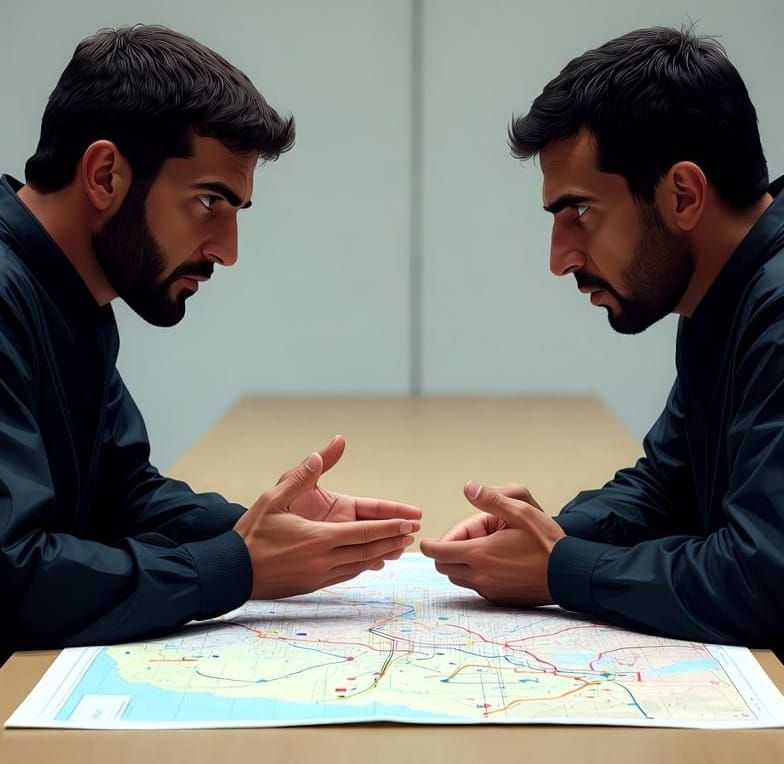
Countries at war or in open hostilities almost always choose a third-party neutral country for negotiations because it solves a cluster of practical, political, security, and psychological problems that make direct talks in either belligerent’s territory (or even in a non-neutral third country) extremely difficult or counterproductive.
Here are the main reasons, in order of importance:
1. Neutrality removes “home-field advantage” and perceived bias
- Negotiating in one side’s capital would signal weakness or subordination to the other side’s domestic audience and the international community.
- A neutral venue makes both delegations feel they are on equal footing. Neither side has to worry about the host government tilting the playing field (e.g., controlling the agenda, media access, or security in a way that favors one party).
- It also avoids the optics of “the enemy is dictating terms on our soil.”
2. Safety and physical security
- War zones are dangerous. Delegates, staff, and even aircraft could be targeted by hardliners, rogue units, terrorists, or accidental strikes.
- A neutral country can provide top-tier security (special forces, secure compounds, no-fly zones) without either warring party having to rely on the other’s protection.
3. No diplomatic relations (or severed relations)
- Once war breaks out, embassies are usually closed and direct flights or visas become impossible or politically toxic.
- A third country acts as a neutral “post office” — both sides can fly in, stay in secure hotels or compounds, and meet without needing to re-establish formal diplomatic channels first.
4. Logistics, infrastructure, and facilitation
- Neutral countries that host talks repeatedly (Switzerland/Geneva, Austria/Vienna, Norway/Oslo, Turkey/Istanbul, Qatar/Doha, etc.) have:
- Purpose-built secure conference facilities
- Professional interpreters and simultaneous translation setups
- Experienced diplomatic staff who know how to run back-channel talks
- Established “good offices” or mediation expertise
- They often offer quiet side rooms for private bilateral meetings while still providing the multilateral framework if needed.
5. Psychological and symbolic value
- Being on neutral ground lowers the emotional temperature. Delegates are physically removed from the battlefield, daily casualty reports, and domestic political pressure.
- It signals to both populations and the world that the parties are serious about compromise rather than grandstanding.
- It can create a “peace bubble” atmosphere that makes small concessions easier.
Real-world examples (classic pattern)
- Vietnam War → Paris (1973)
- Oslo Accords (Israel–PLO) → Norway (1993)
- Iran nuclear deal (JCPOA) → Vienna / Geneva / Lausanne
- Russia–Ukraine early rounds → Istanbul (Turkey), later attempts in various neutral venues
- Afghanistan talks → Doha (Qatar)
- North Korea–U.S./South Korea → often Panmunjom (DMZ, technically neutral) or third countries
In short, a neutral third country is the only practical location that simultaneously satisfies security, equality, logistics, and optics. Without it, talks are far more likely to collapse before they even begin. This is why “neutral venue” has been standard diplomatic practice for centuries.