What data collection limitations exist in remote sensing which would cause errors in climate change estimates?
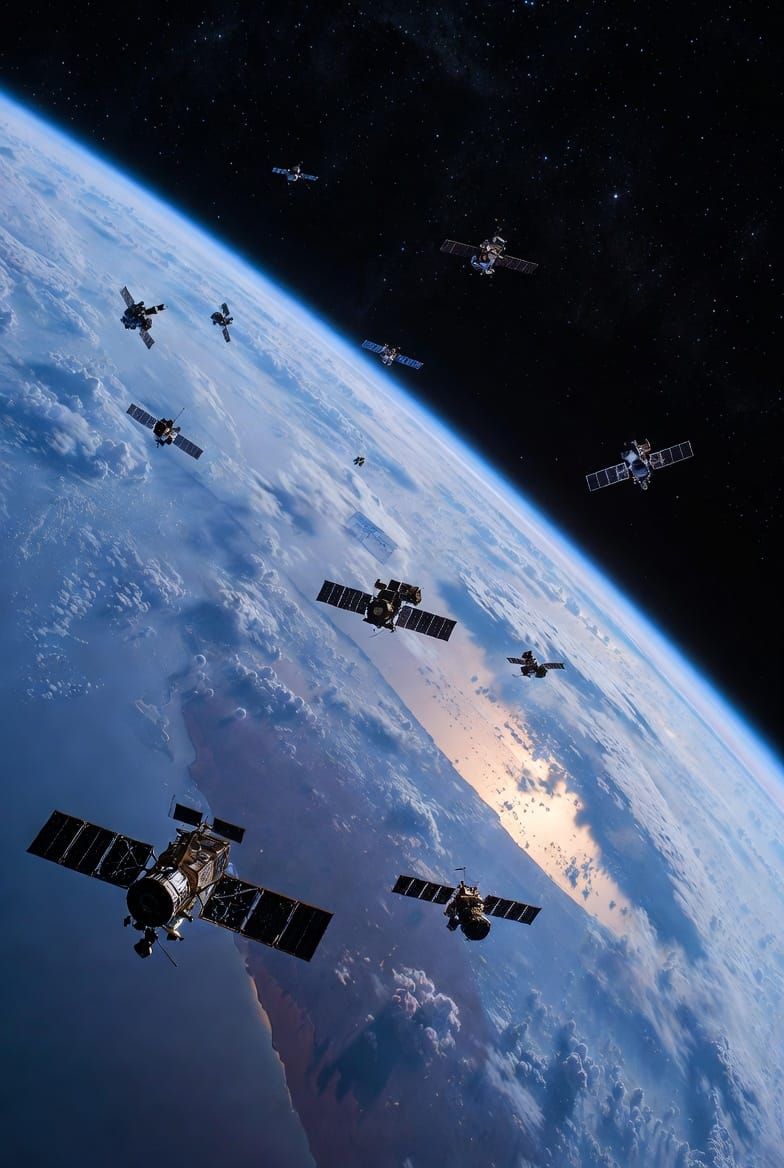
Remote sensing (primarily satellite-based) is essential for monitoring climate change variables like surface temperature, sea ice extent, vegetation cover, precipitation, sea level, and atmospheric composition. However, data collection limitations introduce systematic and random uncertainties that can bias or inflate errors in climate estimates, such as long-term trends, variability, or attribution studies. These issues arise because satellites were often designed for weather monitoring rather than the extreme precision/stability needed for detecting small decadal signals (e.g., ~0.2 K/decade global temperature change).
Key data collection limitations that cause errors include:
- Sensor calibration, degradation, and lack of traceability: Instruments degrade in orbit due to radiation, contamination, vibration, or thermal effects (e.g., diffuser reflectance dropping from 1.0 to 0.92 over time in MODIS). Onboard calibrators (like blackbodies or lamps) also drift, and pre-/post-launch calibration often lacks full SI (International System of Units) traceability. This leads to unquantified biases and drifts in radiometric measurements. For climate data records, even small drifts dominate uncertainty over long timescales, as errors that are negligible in single snapshots accumulate and correlate across space/time. Examples include underestimated or conflicting tropospheric warming trends in MSU/AMSU data or sea surface temperature discrepancies exceeding accuracy needs.
- Orbital effects and viewing geometry: Satellite orbits decay or drift, changing overpass times (e.g., early NOAA satellites shifting from afternoon to evening views), which introduces diurnal sampling biases and artifacts in time series. Different satellites have varying viewing angles, spectral responses, and resolutions, complicating intercalibration (stitching records). This creates inhomogeneities, such as apparent "cooling" or "warming" biases in temperature or radiative flux trends that are actually instrumental.
- Atmospheric interference: Clouds, aerosols, water vapor, and turbulence contaminate optical/infrared data, causing gaps (e.g., 60-70% cloud cover in some regions limits usable scenes) or requiring corrections that introduce errors. Passive microwave sensors penetrate clouds better but have coarser resolution. Retrievals for variables like land surface temperature or precipitation are sensitive to these, leading to systematic biases (e.g., clear-sky-only sampling or over/underestimation in wet/dry seasons).
- Spatial, temporal, and spectral resolution constraints: Many sensors average over hundreds of meters to kilometers, missing fine-scale heterogeneity (e.g., in heterogeneous landscapes or urban areas). Temporal revisit times (days to weeks) or limited record lengths (~50 years for most consistent satellite data) fail to capture rapid events, sub-daily variability, or multi-century natural cycles. Spectral limitations (e.g., broadband vs. hyperspectral) entangle climate signals with instrument changes. This results in smoothed or aliased estimates, underestimating variability or trends in precipitation, evapotranspiration, or land cover change.
- Incomplete global coverage and sampling gaps: Polar-orbiting satellites have gaps at equator or poles; geostationary ones miss high latitudes. Sparse ground validation networks (especially in Africa, high elevations, or oceans) hinder bias correction. Declining in-situ stations increase reliance on satellites with unvalidated errors. Products like precipitation datasets (e.g., CHIRPS or ERA5) show regional biases in arid/tropical/high-elevation areas.
- Retrieval algorithm and processing uncertainties: Raw radiance/reflectance must be converted to geophysical variables via models/assumptions (e.g., emissivity for temperature, drop-size distribution for rain). These are sensitive to auxiliary data errors, simplifications, or "black-box" machine learning, propagating uncertainties. Multi-sensor merging adds inconsistencies.
Overall impacts on climate estimates: These limitations can lead to overestimated/underestimated trends (e.g., in global warming rates, ice melt, or carbon stocks), inflated uncertainty in IPCC-style assessments, or difficulties distinguishing anthropogenic signals from noise/instrumental artifacts. Climate applications require quantified per-datum uncertainty (following metrological standards) and stability far exceeding typical weather needs (e.g., <0.1 K/decade stability for temperature). Progress includes better intercalibration (e.g., GSICS), active sensors (LiDAR/radar), and hybrid satellite-ground products, but fundamental challenges persist for long-term CDRs.
For specific variables, requirements are outlined in GCOS Essential Climate Variables (ECVs), but real-world performance often falls short due to the above factors. Researchers mitigate this via uncertainty budgets, ensemble approaches, and validation, but users should always examine provided error estimates.